

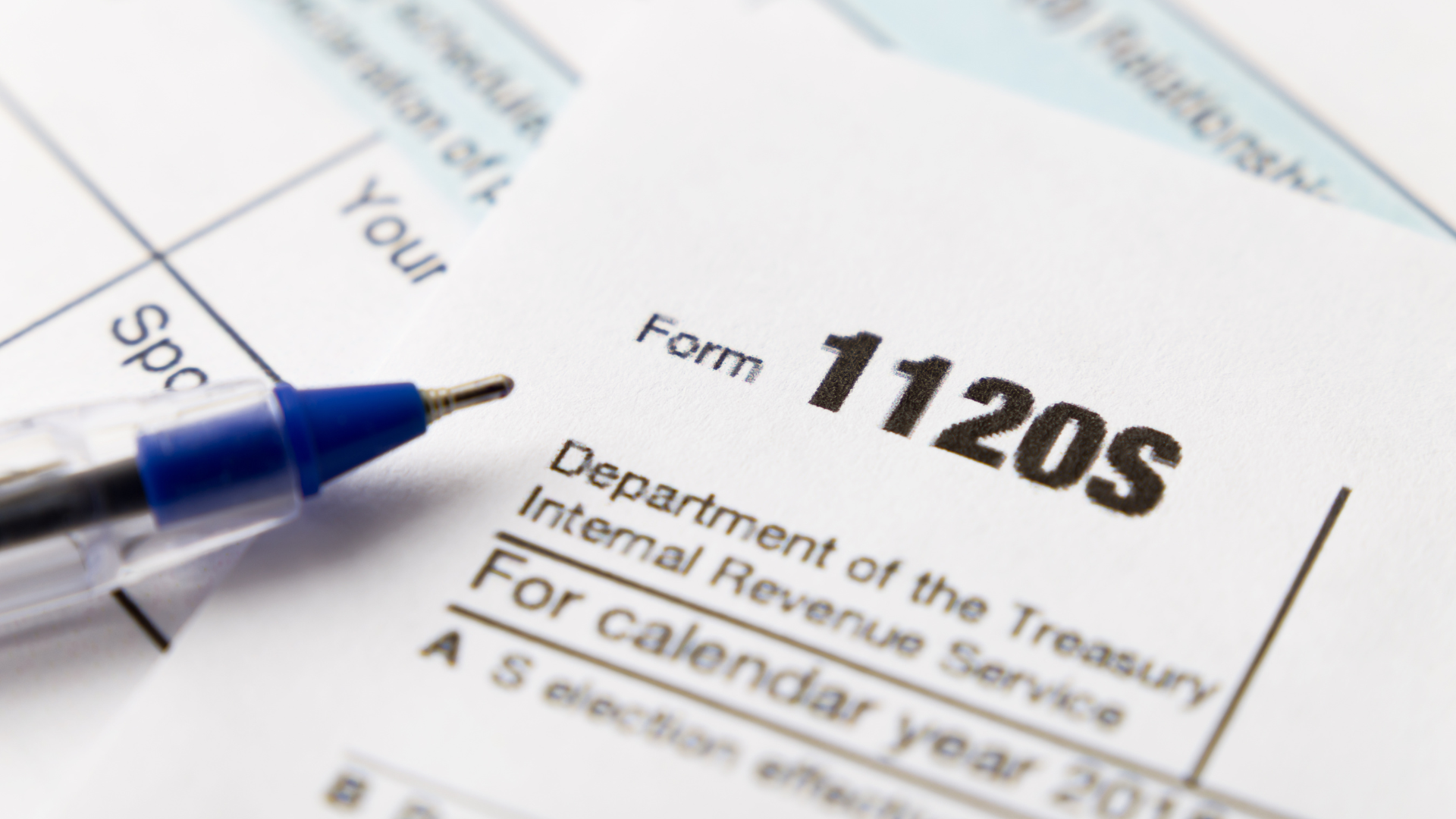
As a small business owner, it’s natural to focus on growing your business and increasing revenue, but what if I told you there’s a way to reduce your tax liability and keep more of what you earn? One powerful strategy that many small business owners overlook is electing to be taxed as an S-Corporation (S-Corp).
In this article, I’ll break down what an S-Corp is, how it works, and why it might be the perfect fit for your business.
What Is an S-Corporation?
An S-Corp is not a separate legal entity like a corporation or LLC. Instead, it’s a tax designation that certain businesses can choose by filing IRS Form 2553. When your business elects to be taxed as an S-Corp, the profits and losses “pass through” directly to the owners’ personal tax returns—meaning you avoid the double taxation that regular corporations face.
But the real magic of the S-Corp comes in the way it handles self-employment taxes.
The Key Benefit: Avoiding Excess Self-Employment Taxes
If your business is currently a sole proprietorship or taxed as an LLC, you’re likely paying hefty self-employment taxes on all your profits. With an S-Corp, you can split your income into two categories:
- Reasonable Salary – You’ll pay yourself a reasonable salary, and this portion will be subject to FICA taxes (Social Security and Medicare).
- Dividends/Distributions – The remainder of the business’s profits can be distributed to you as dividends, which are not subject to self-employment taxes.
Example: Sole Proprietor vs. S-Corporation Taxation
Let’s look at a quick example to show how this works in practice:
Scenario: Maria owns a marketing consulting business and earns $100,000 in profit.
- As a Sole Proprietor: Maria will pay self-employment taxes (15.3%) on the entire $100,000, amounting to $15,300 in FICA taxes, on top of her income tax.
- As an S-Corp: Let’s say Maria pays herself a “reasonable salary” of $60,000. She’ll pay the 15.3% FICA taxes on that salary, which amounts to $9,180. The remaining $40,000 is paid out as dividends and isn’t subject to FICA taxes, saving her over $6,000 in taxes!
In this example, Maria could reduce her self-employment tax burden significantly by electing S-Corp status.
The Pros of Being Taxed as an S-Corp
- Reduced Self-Employment Taxes: As shown above, S-Corp taxation allows you to lower the amount of income subject to self-employment taxes by distributing some profits as dividends.
- Pass-Through Taxation: Profits and losses pass through to your personal tax return, meaning no corporate-level taxes.
- Professional Image: Many clients and partners view corporations as more professional than sole proprietorships or LLCs.
- Flexibility in Profit Distribution: You have the ability to structure income as salary and dividends, providing a strategic advantage for tax planning.
The Cons of S-Corp Taxation
While the S-Corp election can save you money, it’s not without its drawbacks:
- Reasonable Compensation Rules: The IRS requires that you pay yourself a “reasonable salary,” which is a gray area. If you pay yourself too little to avoid taxes, you could be audited and face penalties.
- Increased Administrative Work: Running an S-Corp involves more paperwork. You’ll need to file payroll reports, issue W-2s, and pay yourself a regular salary. This can increase your accounting workload and costs.
- State-Level Requirements: Some states may have additional requirements or fees for S-Corps. For example, in Massachusetts, S-Corps are subject to certain excise taxes.
Is S-Corp Status Right for Your Business?
If your business is generating enough profit that you can reasonably pay yourself a salary and still have some profit left over, electing to be taxed as an S-Corp could significantly lower your tax bill. However, if your profits are modest, the additional administrative burden may outweigh the savings.
It’s essential to evaluate your specific situation with the help of an experienced tax professional.
Conclusion: Keep More of Your Hard-Earned Money
Electing to be taxed as an S-Corp is a powerful tool that small business owners can use to reduce their tax burden. By minimizing self-employment taxes and taking advantage of pass-through taxation, you can keep more of what you earn while ensuring you remain compliant with IRS regulations.
But is an S-Corp right for your business? The answer depends on your individual circumstances, and it’s important to run the numbers to see how much you could save. If you’re wondering whether S-Corp taxation is a smart move for you, I’m here to help.
Let’s chat! Reach out to me today for a free consultation, and we can explore whether electing S-Corp status is the right decision for your business.